
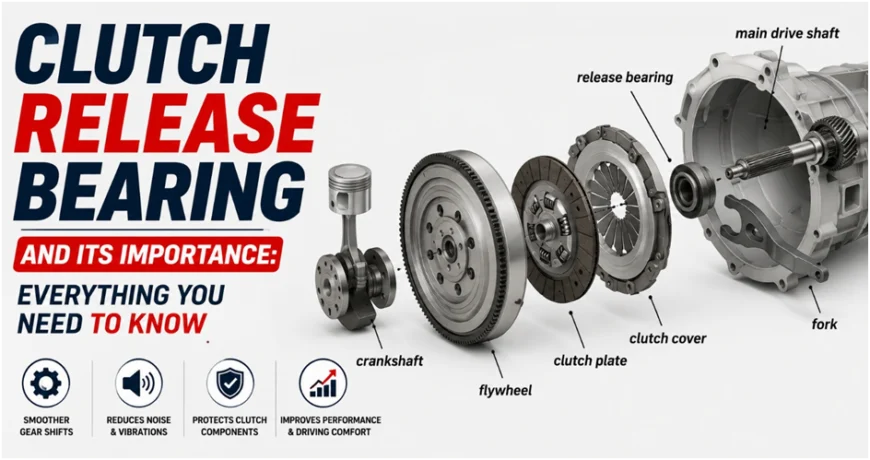
Drivers usually focus most to the clutch system parts such as the clutch plate, pressure plate and flywheel. However, this clutch release bearing is a small component that plays a significant role in the smooth operation of the entire clutch assembly. This is a small part but it is the part that mainly ensures the gear changes are smooth, and so that you can maintain a comfortable drive system.
If left unattended, a defective clutch release bearing can cause unusual sounds, gear shifting issues, clutch pedal vibrations, and eventually, total clutch failure. By understanding how this part functions and why it is important, vehicle owners can face the catch problems early and avoid expensive repairs.
What is a Clutch Release Bearing?
A clutch release bearing, is often called a throw-out bearing, which is a crucial component of a manual transmission vehicle’s clutch system. It is being positioned between the clutch fork and the pressure plate assembly.
Whenever the driver presses the clutch pedal, this release bearing will move forward and applies pressure to the pressure plate fingers. This action disengages the clutch from the engine, allowing the transmission gears to be changed smoothly. Once this the clutch pedal is released, the bearing returns to its resting position.
Although the release bearing only operates when the clutch pedal is pressed, it also experiences considerable stress throughout its lifespan. This is why maintaining a healthy clutch system and adopting good driving habits are important for maximizing bearing life.
How Does a Clutch Release Bearing Work?
The clutch release bearing serves as a connection between the clutch pedal mechanism and the clutch assembly. Its operation may seem to be simple, but it is essential for proper vehicle performance.
The Working Process,
The clutch release bearing functions through the following ways:
- The driver presses the clutch pedal
- The clutch fork moves the release bearing toward the pressure plate.
- The bearing pushes against the diaphragm spring or the pressure plate fingers.
- The clutch disengages from the flywheel.
- Gear shifting will become possible without grinding or damaging transmission components.
- When the pedal is been released, the bearing returns to its original position.
This process can occur over every time when a gear-changes is made, making the release bearing one of the most frequently used components in a manual transmission vehicle.
Why is the Clutch Release Bearing Important?
The clutch release bearing may be small, but it plays an important role in maintaining the overall health and performance of the clutch system.
Ensures Smooth Gear Shifting
The release bearing primary function is to enable smooth clutch disengagement. Without doing so, shifting gears would be made difficult, uncomfortable, and impact the experience of driving.
Protects Other Clutch Components
A release bearing working properly is going to reduce stress on the pressure plate and clutch assembly. This reduces wear and extends the life of other expensive clutch components.
Improves Driving Comfort
The release bearing allows the clutch pedal function smoother and gear changes more accurately. Less vibration, noise and resistance are observed by drivers during clutch engagement.
Supports Transmission Efficiency
The clutch must be worked smoothly in order for the transmission to function properly. A good release bearing helps the gears to engage smoothly and there is a lower strain on the Gearbox compared to is necessary.
Reduces Long-Term Repair Costs
Replacing a worn release bearing at the right time can prevent damage to the pressure plate, clutch disc, and transmission components, helping vehicle owners save money on repairs.
Common Symptoms of a Bad Clutch Release Bearing
A failing clutch release bearing often gives a warning sign before any complete failure occurs. Identifying these symptoms early can help us to prevent major clutch damage.
Unusual Noise When Pressing the Clutch
One of the most common indicators is a squealing, grinding, humming, or chirping sound which appears when the clutch pedal is pressed. These noises usually indicate an internal bearing wear.
Clutch Pedal Vibrations
Drivers may feel unusual vibrations through the clutch pedal. This often happens when the bearing surface becomes worn or damaged.
Difficulty Shifting Gears
If the release bearing is unable to disengage the clutch properly, gear changes may become harder than usual. Drivers may notice resistance when shifting into certain gears.
Rough Clutch Pedal Feel
A damaged release bearing can make the clutch pedal feel rough, inconsistent, or heavier than normal.
Transmission Area Noise
Noises coming from the bell housing area near the transmission are another common symptom of release bearing wear.
Reduced Driving Comfort
As bearing wear progresses, the overall driving experience may become less smooth due to increased noise and clutch operation issues.
What Causes Clutch Release Bearing Failure?
Several factors that can contribute to premature release bearing wear and failure.
Normal Wear and Tear
Just like any mechanical component, the release bearing will eventually wear out over time. Continuous operation will ultimately degrade the internal bearing surfaces.
On the Clutch
Many drivers are unknowingly rest their foot on the clutch pedal while driving. This habit keeps the release bearing under constant pressure, accelerating wear.
Heavy Traffic Conditions
Frequent stop-and-go driving requires a repeated clutch operation, which increasing the workload on the release bearing.
Poor Quality Replacement Parts
Using low-quality or non-standard components can significantly reduce bearing life and reliability.
Improper Clutch Installation
Incorrect alignment during clutch replacement can place excessive stress on the release bearing, causing premature failure.
Lack of Maintenance
Ignoring clutch-related symptoms and delaying repairs can lead to bearing damage and additional clutch system problems.
Tips to Extend the Life of Your Clutch Release Bearing
Good driving habits can go quite a way in increasing the life of your clutch release bearing.
Never Put Your Foot on the Clutch
Maintaining a light pressure on the clutch pedal will maintain the release bearing engaged and will lead to wear.
Smooth gear shifts
Avoid rapid gear changes and sudden clutch engagement in which possible.
Use Quality Replacement Parts
Always choose genuine OEM or trusted aftermarket clutch components for reliability and durability.
Replace Components in a Set
Usually, you need to replace the release bearing when replacing the clutch assembly.
Regular Inspection Schedule
Routine clutch checks can catch minor issues before they turn into expensive repairs.
Follow Excellent Driving Practices
Using the clutch only when necessary leads to fewer stresses to the whole clutch system and improves component durability.
When Should You Replace the Clutch Release Bearing?
Most automotive experts suggest replacing the clutch release bearing when the clutch assembly is removed or replaced. Because the bearing is labour intensive to access, replacing it at the same time as the clutch kit will help prevent future repair costs.
Inspect immediately if you notice:
- Grinding noises during clutch operation
- Clutch pedal vibration
- Hard gear shifting
- Unusual clutch feel
- Noise from the transmission bell housing
Replacing the bearing before it fails completely can help prevent more extensive damage to the clutch system.
FAQs
1. What is a clutch release bearing in a car?
The clutch release bearing is an essential component of the clutch system, it mainly helps in disconnecting the clutch when you press the clutch pedal to release it. It will temporarily separates the engine and transmission so that you can change gears smoothly. A release, that fails to function properly, can make the gear change to difficult and uncomfortable. It’s functioning every time you press the clutch pedal, so it gets worn-out over time. A healthy release bearing keeps the clutch working smoothly and makes for a better driving experience. It additionally avoids other clutch components from being unnecessarily stressed and worn.
2. In what way can you determine if the clutch release bearing is defective?
Usually, before a clutch release bearing fails completely, it will provide some warning signs. Drivers may hear some squealing, grinding or humming appears while pressing the clutch pedal. In some situation the clutch pedal may vibrate or feel rough in operation. The clutch may not disengage properly, so gear shifting may also become more challenging than usual. Ignoring all these symptoms can lead to further damage to the clutch system. Whenever you see these signs and symptoms, the best plan of action is to have the vehicle inspected.
3. Can I continue driving with a bad clutch release bearing?
A worn clutch release bearing may still be drivable, however it’s not recommended to ignore the problem. The damaged bearing, over time, might cause additional stress to the pressure plate and other clutch parts. This can result in expensive repairs and even clutch failure. Drivers may also find it increasingly difficult to change their gears. Should you notice any unusual noises from the clutch or any damage performance so that it is wise to have the bearing inspected and replaced if required. Usually swapping the main clutch is much more costly than the early repairs.
4. How long does a clutch release bearing typically last?
The lifespan of a clutch release bearing depends on driving habits, traffic conditions, and overall vehicle maintenance. In most vehicles, it can last anywhere between 80,000 and 150,000 kilometers. Drivers who frequently ride the clutch or drive in heavy stop-and-go traffic may experience faster wear. Proper clutch usage and smooth gear changes can significantly extend the bearing’s life. Regular inspections can also help identify wear before it becomes a serious issue. Replacing the bearing during a clutch replacement is often considered a smart preventive measure.
5. Should the clutch release bearing be replaced along with the clutch kit?
Yes, most mechanics recommend replacing the clutch release bearing whenever the clutch kit is replaced. Since the clutch assembly must be removed to access the bearing, replacing both components together helps save future labour costs. Installing a new bearing ensures that all clutch-related parts wear evenly and perform efficiently. It also reduces the chances of having to reopen the clutch assembly shortly after a clutch replacement. Using a quality genuine or OEM bearing can further improve reliability and longevity. This approach provides better value and long-term peace of mind for vehicle owners.
Conclusion
The clutch release bearing is one of the most important overlooked components in a vehicle’s clutch system. It plays a crucial role in clutch disengagement, smooth gear shifting, driving comfort, and overall transmission performance. Although it is relatively a small part, its failure can lead to a significant clutch and transmission problems if ignored.
By recognizing early warning signs, following proper driving habits, and replacing worn components on time, vehicle owners can extend the lifespan of their clutch system and avoid costly repairs. At Motrparts, you can find genuine, OEM, and high-quality aftermarket clutch release bearings for a wide range of vehicles, ensuring reliable performance and long-lasting durability.