
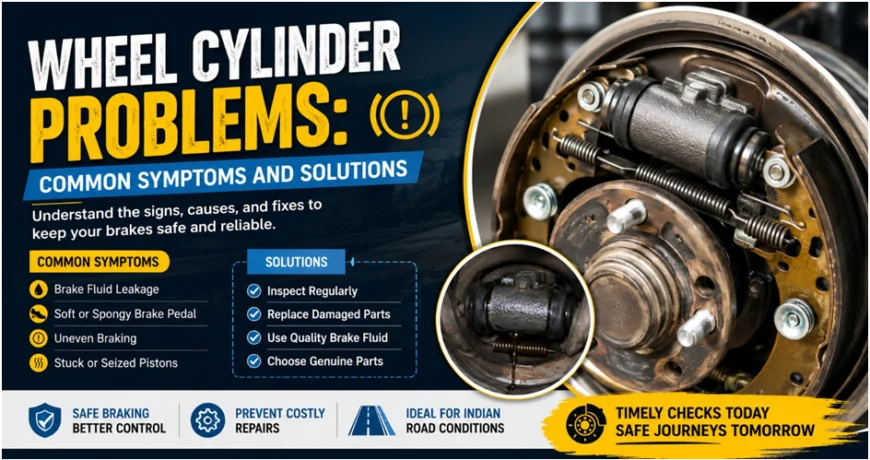
Common Wheel Cylinder Problems Symptoms and Solutions Brakes are among the most essential safety systems on any vehicle, but many car owners disregard them until something serious goes terribly wrong. A soft brake pedal, slight fluctuations in the brake performance or strange noises while braking are often signs of issues with the braking system. A frequently ignored component is the wheel cylinder. So, understanding about wheel cylinder problems is vital to keep your vehicle safe and functioning smoothly. Whether you are navigating through choked city traffic, long highways or rough village roads in India, your braking system is under constant stress. Catching wheel cylinder issues early can help prevent unexpected brake failure and save costly repairs.
What is a Wheel Cylinder?
A wheel cylinder is a small, but highly significant hydraulic part, that is normally found in vehicles with drum brakes. Its primary function is to convert the hydraulic pressure that the brake fluid creates into a mechanical force that pushes the brake shoes against the brake drum.
Modern vehicles possess disc brakes on the front wheel but many Indian passenger cars, commercial vehicles and older models have drum brakes on the rear wheels. Wheel cylinder is an important segment of such systems to ensure balanced braking performance and safe stopping of the vehicle.
How Does a Wheel Cylinder Work?
Each time you step on the brake pedal, the master cylinder builds hydraulic pressure and sends brake fluid through the brake lines. The pressure is transmitted to the wheel cylinder, which forces the internal pistons outwards and the brake shoes are pressed against the rotating drum. Friction between those parts slows the wheel and stops the vehicle.
When the brake pedal is released, return springs pull the brake shoes back to their original position so the wheel can turn freely. Due to the high pressure and exposure to heat, moisture and dust, the wheel cylinder must be regularly inspected to maintain proper braking efficiency.
Common Wheel Cylinder Problems and Their Warning Signs
Brake Fluid Leaks
One of the most frequent issues of wheel cylinder faced by vehicle owners is leakage of brake fluid. The cylinder has rubber seals inside it that may wear out over time due to age, heat or contamination. When these seals break down, the brake fluid leaks out around the wheel assembly. A leaking brake cylinder reduces the hydraulic pressure in the system, which in the end affects stopping power. You might notice fluid stains around the wheels, a reduced amount of brake fluid, or feel that the brake pedal is softer than normal.
Soft or Spongy Brake Pedal
You can detect a problem with the brake cylinder if the brake pedal is moving lower than usual or feels spongy when you press it. If there is a leak or trapped air in the brake system, the hydraulic pressure is not transferred correctly.
This issue is particularly risky in Indian city driving where sudden braking is common due to traffic, pedestrians and unpredictable road conditions. There are also a lot of chances of accidents in case of delayed braking response.
Uneven Braking or Vehicle Pulling to One Side
A bad wheel cylinder may not apply equal pressure to both sides of the braking system. This can cause one wheel to slow down more than the other, and the vehicle will pull to one side when braking.
In addition to the effect on driving comfort, uneven braking also leads to uneven wear of brake shoes and additional stress on other braking components. With timely diagnosis further damages can be prevented and braking performance is able to remain stable.
Stuck or Seized Wheel Cylinder Pistons
Over time dirt, rust and moisture can build up in the brake cylinder and lead to the internal pistons to stick. If a piston is seized, the brake shoes may not move correctly, which could lead to poor braking or brakes that don’t release fully.
Abnormal heat around the wheel, a burning odor, a loss of fuel efficiency, or difficulty moving the vehicle effortlessly are some of the signs of a breakdown. If you see these signs, have a mechanic check that out immediately.
Why Wheel Cylinder Problems Are Common in Indian Driving Conditions
Indian roads present several challenges that can accelerate wear and tear of braking components. Frequent stop-and-go traffic, rough roads, potholes, monsoon water exposure, and high temperatures can affect the condition of wheel cylinders over time.
Vehicles that regularly travel in dusty environments or waterlogged areas are more prone to rust formation and contamination inside the braking system. Regular servicing and brake inspections become essential to detect problems before they compromise safety.
Wheel Cylinder Repair vs Replacement: Which Option Is Better?
Many vehicle owners wonder whether it is more beneficial to repair a damaged wheel cylinder or to replace it. Occasionally, replacing damaged seals can temporarily fix minor leakage problems. However, if the cylinder body is corroded or the pistons are worn out, replacement is usually the safer and more reliable solution.
Replacement of a wheel cylinder will bring back the proper hydraulic pressure and consistent stopping power. It is important to choose a component that matches your vehicle specifications to avoid compatibility problems.
Common Mistakes to Avoid When Dealing with Wheel Cylinder Issues
One of the biggest mistakes vehicle owners make is to keep driving as usual when they notice problems with the brake system. A minor brake fluid leak or a strange sensation in the brake pedal might not seem like an issue at first, but it can quickly become a serious safety concern.
Another common mistake is the choice from poor quality replacement parts simply because they are cheap. Poor quality wheel cylinders can fail earlier and impact the entire braking system. Routine brake fluid changes, regular inspections and timely replacement of worn components contribute to long-term vehicle safety.
FAQs
1. What are the symptoms of a faulty wheel cylinder?
Symptoms of a bad wheel cylinder include brake fluid leaking, a soft or spongy brake pedal, reduced braking efficiency, and uneven braking. Failure to recognize these signs may compromise vehicle safety and lead to costly brake repairs.
2. What is the average price for a replacement wheel cylinder in India?
The cost of wheel cylinder replacement in India typically ranges from ₹300 to ₹2,500 for the part, depending on the vehicle model and brand. Labour charges vary based on the workshop and complexity of the repair.
3. Is it acceptable to drive my car with a leaking wheel cylinder?
Don’t drive the vehicle with a leaking wheel cylinder, as it reduces hydraulic brake pressure and affects the car’s capacity to stop. It must be inspected and repaired immediately to ensure that driving is safe.
4. How long does a wheel cylinder last on a vehicle?
A wheel cylinder can last for several years if it is maintained properly and the fluid is changed regularly. But the life span depends on the driving conditions, road condition, moisture exposure and quality of the component used.
5. What is the best wheel cylinder replacement for my car?
The best wheel cylinder replacement is a wheel cylinder that matches your vehicle’s make, model and braking system specifications. The quality of the part you select will impact the performance of your brakes.
Conclusion
Never ignore problems related to your wheel cylinder, because they directly affect whether or not you are able to stop your vehicle safely. Early identification of warning signs including soft pedals, brake fluid leaks, seized pistons, and uneven braking can help avoid costly repairs and improve road safety.
Considering difficult driving conditions in India, it becomes highly essential to perform regular brake inspections and replace worn out components quickly in order to have a reliable braking performance. Opting for genuine and trustworthy automotive parts from reliable sources like motrparts.com when purchasing replacement parts can lead to the ideal fit, longevity, and peace of mind for your vehicle maintenance requirements.