
You are driving along and the ABS warning light comes on the dashboard suddenly. The brakes might still feel normal, so it’s easy to think the warning can be ignored. But in many modern cars, a problem with the wheel speed sensor can have more effects than just on the ABS system. The wheel speed sensor constantly checks the speed each wheel is spinning and sends this to the vehicle’s electronic control unit. This data is used by systems such as ABS, traction control and electronic stability control.
If the sensor malfunctions or produces an inaccurate reading, these systems may not work as intended. Such type of problem is worth investigating especially in India where cars face potholes, rough roads, dust, mud, waterlogging and heavy traffic. Knowing the symptoms, causes and solutions can help you catch the problem before it gets more expensive or affects vehicle safety.
What Is a Wheel Speed Sensor?
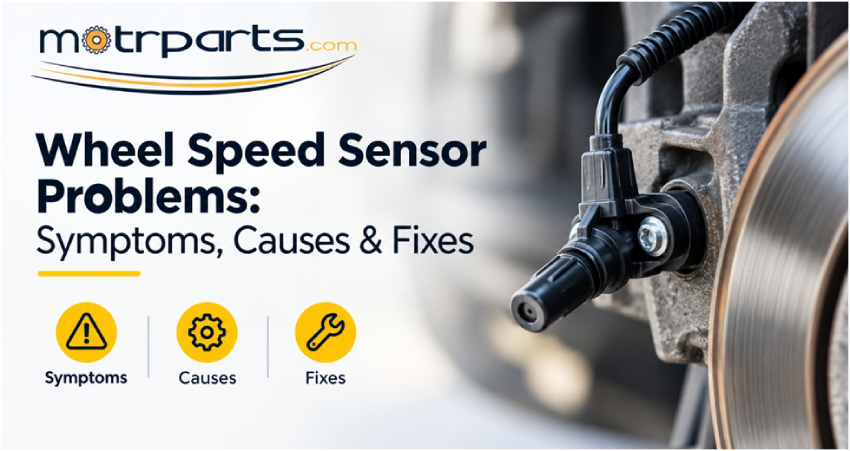
A wheel speed sensor is a small electronic part that sits close to a vehicle’s wheel hub, brake assembly or axle. It measures the speed of rotation of the wheel and sends the information to the control unit of the car.
Each wheel can have its own speed sensor. The vehicle compares the speed information from different wheels to determine whether one wheel is rotating significantly slower or faster than the others.
This is especially true under braking. For example, if one wheel is about to lock up when you brake hard, the ABS system can sense the difference in wheel speed and adjust the brake pressure. The same information can also be used by traction control and electronic stability systems.
How Does a Wheel Speed Sensor Work?
As the wheel rotates, the sensor detects changes in the magnetic or electronic signal produced by the rotating ring. The sensor then sends these signals to the ABS control module. The module calculates the rotational speed of each wheel and uses the information to control the vehicle’s safety systems.
Because the sensor is located close to the wheel, it is exposed to road conditions every day. Dust, mud, water, stones and physical impact can therefore affect the sensor, its wiring or the components around it.
What Are the Symptoms of a Bad Wheel Speed Sensor?
A faulty wheel speed sensor can produce different symptoms depending on the vehicle and the nature of the failure. In some cases, the warning light appears immediately. In others, the problem may occur intermittently and be harder to identify.
ABS Warning Light on the Dashboard
One of the most common signs is the ABS warning light. If the vehicle detects an abnormal signal from one of the wheel speed sensors, it may store a fault code and illuminate the ABS warning light. The car may continue to brake normally under ordinary conditions, but the ABS function may be unavailable. This is why an ABS warning should not simply be ignored.
Traction Control or ESC Warning Light
A wheel speed sensor does not only provide information to the ABS system. Modern vehicles also use wheel speed data for traction control and electronic stability control. If the sensor signal is unreliable, the vehicle may switch off these systems and display a traction control, ESC or related warning light. In some cars, several warning lights can appear at the same time.
ABS Activates Unexpectedly
In certain cases, a damaged sensor or incorrect wheel speed signal can cause the ABS system to react when it should not. A driver may feel a pulsing sensation through the brake pedal during low-speed braking.
This can also be caused by problems with the tone ring, wheel bearing or sensor installation, so proper diagnosis is important before replacing the sensor.
What Causes Wheel Speed Sensor Problems?
Wheel speed sensors are designed to operate in difficult conditions, but they are not immune to damage. One common cause is physical damage around the wheel area. A sensor or its wiring can be affected during suspension, brake or wheel-related repairs. Dirt, mud and road debris can also accumulate around the sensor. Indian roads can expose the wheel assembly to large amounts of dust and debris, while monsoon driving can introduce water and moisture into connectors.
Electrical problems are another common cause.
Damaged wiring, loose connectors, corrosion or poor connections can interrupt the signal even when the sensor itself is working correctly. A faulty tone ring or reluctor ring can also create symptoms similar to a bad sensor. In addition, excessive play in a wheel bearing can change the sensor-to-ring distance and cause an inconsistent signal.
How Are Wheel Speed Sensor Problems Diagnosed?
Replacing the sensor without checking the complete system can sometimes result in unnecessary expense. A proper diagnosis normally begins with an ABS diagnostic scan. The scan can show a fault code indicating which wheel or circuit has reported a problem.
However, the fault code should not automatically be treated as proof that the sensor itself needs replacement. A technician should inspect the sensor, electrical wiring, connector, tone ring and wheel bearing. Depending on the vehicle, live wheel-speed data can also be checked while the car is stationary or being driven under controlled diagnostic conditions. This approach helps identify whether the actual problem is the sensor or another component affecting its signal.
Can a Wheel Speed Sensor Be Repaired?
Whether a sensor can be repaired depends on the actual problem. If dirt or debris is interfering with the sensor, cleaning the area may solve the issue.
However, an internally damaged sensor generally needs replacement. Similarly, damaged wiring may require electrical repair rather than replacement of the sensor itself.
This is why replacing parts based only on a dashboard warning light is not recommended. Finding the actual source of the fault first can prevent repeated repairs.
How to Choose the Correct Wheel Speed Sensor?
The selection of the appropriate sensor is more important than the physical fit. The electrical specification, connector design, mounting position and signal characteristics have to match the vehicle. The safest way is to check the original part number or check compatibility with your vehicle registration details, VIN or chassis number where available.
It is also important to take into account the quality and source of the replacement part. A poor-quality sensor can provide an inconsistent signal and may lead to repeated ABS warnings.
Common Mistakes When Replacing a Wheel Speed Sensor
One common mistake is assuming that an ABS warning automatically means the sensor has failed. As mentioned earlier, wiring, connectors, tone rings and wheel bearings can also produce similar symptoms.
Another mistake is purchasing a replacement based only on the car model. The same vehicle may have different sensors depending on the model year, engine, variant or wheel position. Drivers should also avoid ignoring intermittent warning lights. If the sensor works sometimes and not others, there may be a problem with the sensor or an electrical connection that could get worse later on.
Why Is a Properly Working Wheel Speed Sensor Important?
A wheel speed sensor may be a relatively small component, but the information it provides is important for several vehicle safety systems. A correctly functioning sensor allows the ABS and related electronic systems to receive accurate wheel-speed information. This becomes particularly useful during sudden braking, cornering or situations where wheel traction changes.
In Indian driving conditions, one is bound to encounter sudden braking and unpredictable road surfaces. Therefore, maintaining the ABS and its associated systems in proper working condition is an important part of routine maintenance.
Frequently Asked Questions?
1. What are the most common symptoms of a bad wheel speed sensor?
The common symptoms include an ABS warning light, traction control or ESC warning, ABS malfunction, unusual ABS activation and, on some vehicles, problems with speed-related electronic functions.
2. Can I drive with a faulty wheel speed sensor?
The vehicle may continue to drive, but ABS, traction control or stability functions may be disabled or affected. It is advisable to have the warning diagnosed rather than continuing to drive without checking the problem.
3. How can I identify which wheel speed sensor is faulty?
An ABS scanner can be used to help identify the faulty wheel or circuit. The sensor, wiring, connector, tone ring and wheel bearing should also be inspected before replacing the component.
4. Should I replace or clean a wheel speed sensor?
If the problem is caused by dirt or debris, cleaning may help. If the sensor has internal electrical damage or physical damage, replacement is generally required after confirming the fault.
5. Why should I buy a wheel speed sensor from Motrparts?
Motrparts offers a range of automotive spare parts with vehicle compatibility information to help customers select the correct part. Before purchasing a wheel speed sensor, you can verify the vehicle model, variant and part number to reduce the risk of ordering an incompatible part.
Conclusion
Wheel speed sensor problems should not be ignored just because the car continues to run normally. The sensor provides important information to the ABS, traction control and electronic stability systems, and an inaccurate signal can affect how these systems operate.
If an ABS or traction control warning appears, get the vehicle diagnosed properly instead of immediately replacing the sensor. Check the wiring, connector, tone ring and wheel bearing along with the sensor itself. When replacement is necessary, verify the part number and vehicle compatibility before ordering. Opting for a genuine or good quality automotive part will help you avoid compatibility issues and repeat repairs for replacement parts. Car owners can check suitable wheel speed sensors and other spare parts at Motrparts.com based on their vehicle’s exact requirements.