
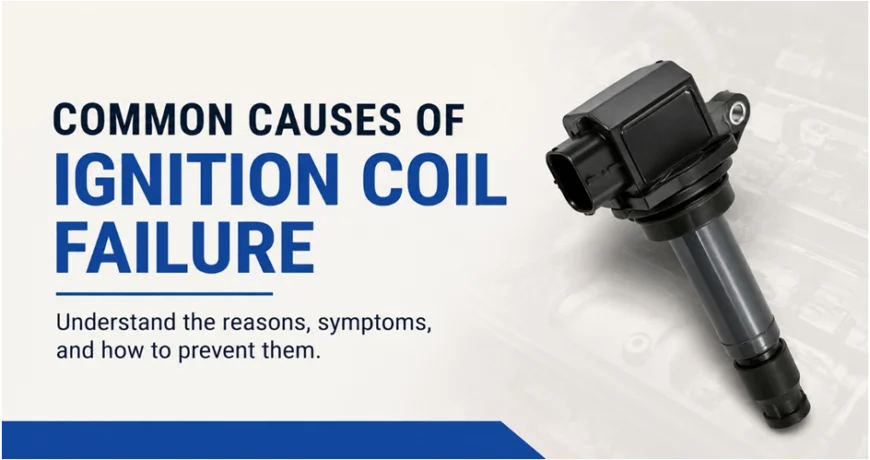
Most of us don’t think about the ignition coil until the car performs differently. It might hesitate when you accelerate, idle rough at a traffic signal, or take longer than usual to start. There are quite a variety of components that can result in these issues; however, a defective or damaged ignition coil is usually one of the main culprits.
The high voltage needed to create the spark in the spark plugs is produced by the ignition coil. That spark starts the air and fuel mixture and keeps the engine running smoothly. The ignition coil is subjected to heat, vibration and electrical stress constantly, since it operates as long as the engine is operating. Like any hard-working part, it will eventually start to wear out. Knowing what causes an ignition coil to fail can help you catch problems early, reduce repair costs, and avoid being stranded by an unexpected breakdown.
Why Ignition Coils Don’t Last Forever
Although designed for long-term reliability, ignition coils operate in one of the most demanding conditions in a vehicle. They are exposed to extreme temperatures, continuous electrical current and constant engine movement. Slowly over the years these conditions impact the internal insulation and electrical windings.
Frequently, an ignition coil failure is not the result of a single incident. Instead, it is the result of months or even years of gradual wear that eventually affects the coil’s ability to produce a strong spark.
Heat Slowly Damages the Coil
Heat is one of the leading causes of ignition coil failures. Every time you drive, every part of the engine bay becomes extremely hot. The ignition coil is exposed to heat continuously when you’re in stop-and-go traffic, traveling on long trips, or it’s hot on the outside. This repeated heating and cooling causes the insulation inside the coil to weaken.
Once the insulation breaks down the electricity can leak before it reaches the spark plug. The engine can start to misfire, lose power or get less responsive. Most drivers will only notice these symptoms once the engine has warmed up, often a sign that heat has taken its toll on the ignition coil.
Worn Spark Plugs Put Extra Pressure on the Ignition Coil
Spark plugs and ignition coils work in combination. When the spark plugs are worn out the ignition coil has to produce a higher voltage to create the same spark. At first this extra effort doesn’t seem like much, but over thousands of kilometers it puts a constant stress on the ignition coil. The additional workload shortens the life span over time. Another easy maintenance task that can save your ignition system from undue stress is replacing the spark plugs at the recommended interval.
Oil Leaks Can Damage Electrical Components
Oil leaks are often ignored because the vehicle may continue running normally. However, if engine oil reaches the spark plug wells, it can affect the ignition coils.
Oil traps heat around the coil and gradually damages the rubber boots and insulation. Dirt also sticks to the oily surface, making the problem even worse.
Repairing a leaking valve cover gasket early not only protects the ignition coil but also prevents damage to other engine components.
Moisture Can Create Unexpected Problems
Fluids and electrical components are never a good combination. When you drive through flooded roads, wash the engine or if seals are worn, water can get into the ignition system. A little moisture can break the electrical flow and cause the engine to misfire or hesitate.
If moisture sits in the ignition system for a prolonged amount of time, it can lead to corrosion and permanent damage. To minimize this risk, keep the engine compartment clean, and avoid spraying electrical parts directly using high pressure water.
Electrical Issues Can Shorten Coil Life
An ignition coil depends on a stable electrical supply to work properly. Problems such as damaged wiring, loose connectors, poor grounding, a weak battery, or an alternator that’s not charging correctly can all affect its performance.
Instead of operating under normal conditions, the ignition coil is forced to handle unstable voltage, which increases internal wear over time. Before replacing a faulty coil, it’s always worth checking the surrounding electrical system to make sure the root cause isn’t somewhere else.
Constant Vibration Adds to the Wear
Every vehicle experiences vibration while driving. Although ignition coils are built to handle normal movement, years of vibration can loosen connections or create tiny cracks in the housing.
These cracks may allow dust or moisture to enter the coil, eventually causing electrical leakage and poor engine performance. Vehicles that are regularly driven on rough roads often experience this type of wear sooner.
Don’t Ignore the Early Warning Signs
If the ignition coil becomes wrong, it usually gives you plenty of warning before it stops working completely. If you notice rough idling, engine hesitation, reduced fuel efficiency, slower acceleration, frequent misfires, or a check engine light, something is wrong. Early on through addressing these symptoms you can prevent additional damage to expensive components such as the catalytic converter and save yourself from higher repair bills.
FAQs
1. What are the early symptoms of a failing ignition coil?
A failing ignition coil typically shows a few warning signs before it completely fails. You may notice that the engine runs rough when idling, the car hesitates when you press the gas pedal, or it doesn’t start as quickly as it used to. Some drivers will also notice a drop in fuel efficiency or see the Check Engine Light come on.
2. How long does an ignition coil normally last?
The lifespan of an ignition coil cannot be determined; it depends mostly on how the vehicle has been driven and maintained. In many cases they last well over 100,000km without any issues. Their life could be decreased by such factors as excessive engine heat, worn spark plugs, defective electrical connections, or oil leaks. Regular maintenance can identify these issues before they cause an ignition coil failure.
3. Do worn spark plugs affect the ignition coil?
Yes, they can certainly do so. As spark plugs get older and more worn out, the ignition coil has to work much harder to create the spark needed for combustion. That extra work puts added stress on the coil each time the engine runs. This can shorten the life of the ignition coil over time. Replacing spark plugs on schedule is a simple step that helps keep the entire ignition system working efficiently.
4. What is the most common reason for ignition coil failure?
In most cases, ignition coils fail because of normal wear after years of regular use. Since they operate in a high-heat environment and generate high voltage every time the engine runs, the internal components gradually wear down. Other issues like engine overheating, moisture, oil leaks, or neglected spark plugs can also speed up the failure. Routine maintenance is the best way to keep these problems under control.
5. Why should I consider buying an ignition coil from Motrparts?
When it’s time to replace an ignition coil, buying from a trusted seller can make all the difference. At Motrparts, you can choose from a wide range of genuine and reliable aftermarket ignition coils that are designed to fit different car models. The website makes it easy to find the right part, and you can order it from the comfort of your home without the hassle of visiting multiple stores. With quality products, reasonable prices, and dependable delivery across India, Motrparts is a convenient choice for keeping your car running smoothly.
Conclusion
An ignition coil may be a small component, but it has a big impact on your vehicle’s overall performance. If you notice symptoms such as engine misfires, rough idling, hard starting or poor fuel economy, it is important to have the problem checked before it leads to more expensive repairs. Regular maintenance, timely spark plug replacement and keeping the ignition system in good condition can help extend your engine’s life.
If you need to replace a bad ignition coil, choose a quality part that matches your vehicle’s specifications. Motrparts offers a wide range of genuine and trusted aftermarket ignition coils for various car models, allowing you to restore your vehicle’s performance with confidence. Selecting the correct replacement part from a reliable source helps ensure smoother engine operation, improved reliability, and peace of mind on every drive.